Beach Paradise vs Urban Culture: What's Your Real Cost to Travel Brazil?
So you're thinking about Brazil, and the first question bouncing around your head is probably: "How much is this going to set me back?" Here's the honest truth—Brazil isn't a one-price destination. Whether you're imagining yourself sipping caipirinhas on a pristine Atlantic coastline or diving into the energy of São Paulo's street food scene, your budget depends entirely on what Brazil you want to experience.
The jogo bonito of travel planning is finding the sweet spot between unforgettable experiences and what won't drain your savings account. And yes, Brazil absolutely offers options for every budget level. Let's break down what you're really looking at in 2026.
The Beach Paradise Route: Coastal Costs

When most people picture Brazil, they're imagining crystalline waters, dramatic rock formations, and endless stretches of sand. The reality? It can be surprisingly affordable, or absolutely luxurious—your choice.
Budget Beach Destinations
Head to lesser-known coastal spots like Jericoacoara in Ceará or the beaches around Maragogi in Alagoas, and you'll find yourself in a different Brazil entirely. Guesthouses run between $25-$45 per night. Street-level meals—think fresh seafood ceviche or grilled fish at beachside shacks—cost $5-$12. Beer and caipirinhas hover around $2-$4 at casual spots. Daily budget here? Realistically $50-$70 for a comfortable, non-luxury experience.
These off-the-beaten-path beach towns maintain an authentic feel that the Instagram-famous destinations have partially lost. You're getting genuine interaction with locals, less crowded breaks if you're a surfer, and that rare sense of discovery that makes travel worth the plane ticket.
Premium Coastal Living
Now flip to luxury beach resorts in places like Bahia's Costa do Sauípe or the high-end pousadas (boutique guesthouses) scattered along the southern coast near Paraty. Here you're looking at $150-$400+ per night for accommodation. Beachfront restaurants serving sophisticated takes on traditional Brazilian cuisine? $20-$50 per entree. Spa treatments and water sports add another $60-$150 per activity.
Daily spend at this level? Budget $300-$500 if you're treating yourself properly. This tier includes personalized service, culinary experiences you won't forget, and typically smaller, more exclusive properties that actually let you feel like you've escaped somewhere.
Urban Culture and City Exploration Expenses

Brazil's cities pulse with different energy than its beaches. Rio, São Paulo, Salvador, and Recife offer cultural immersion that rivals anywhere globally, and the costs reflect the intensity of what's happening.
Mid-Range City Exploration
You can absolutely experience Brazil's urban culture without spending absurdly. Rio de Janeiro hostels range from $20-$35 per bed. Mid-range hotels land around $60-$100. Street food—those iconic pastel pockets, acarajé (deep-fried black-eyed pea balls), and açai bowls—costs $3-$8. Proper sit-down meals at casual restaurants run $10-$18.
Cultural activities shift your costs here. A favela tour with a responsible, community-focused operator (not the sketchy ones) ranges $30-$60. Visiting museums, galleries, and historical sites typically charges $5-$15 entry. Samba lessons or capoeira classes run $20-$45 for a single session. City transportation via metro or buses costs just 50 cents to $1.50 per trip.
Realistic daily spend in a major city on this budget level? $80-$120 including meals, one cultural activity, and transport.
Upscale Urban Experiences
If you want upscale hotels, fine dining at award-winning restaurants, private cultural tours, and that VIP treatment, expect $200-$350 nightly for accommodation alone. Top-tier restaurants in São Paulo or Rio charge $40-$120 per entree. Private art gallery tours, exclusive samba performances, or personalized neighborhood walks with expert guides run $100-$250.
The difference between mid-range and luxury urban travel in Brazil is stark. You're not just paying for comfort—you're paying for access, personalization, and experiences curated specifically for you rather than group tours. Daily spend here easily exceeds $400-$600.
Adventure and Nature Immersion: Getting Into the Real Brazil
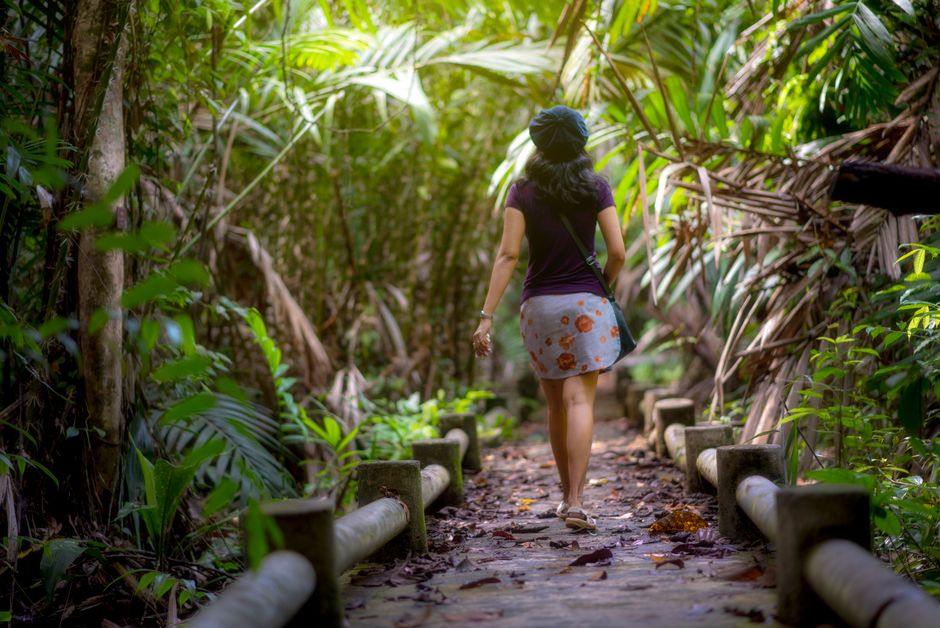
Some of the most unforgettable Brazil experiences happen where the wild things are—rainforests, waterfalls, wildlife reserves, and adventure activities that make your heart race.
Eco-Tourism on a Reasonable Budget
The Pantanal wetlands offer exceptional wildlife watching with costs way below Amazon luxury lodges. Basic eco-lodges run $80-$150 per night with meals included. Multi-day guided excursions (typically three days, two nights) cost $250-$400 total. This includes your jeep safaris, boat tours, naturalist guides, and meals—basically everything you need for serious wildlife encounters.
Similarly, visiting national parks like Lençóis Maranhenses or trail-based destinations in southern Brazil costs significantly less. Park entry fees are typically $5-$15. Guided hikes run $40-$80. Modest accommodations in gateway towns cost $30-$60.
Premium Nature Experiences
Luxury eco-lodges in the Pantanal or exclusive Amazon experiences operate at a different level entirely. Five-star jungle lodges with expert naturalists, gourmet meals, and premium accommodations range $250-$450+ per night. Week-long Amazon expeditions with top operators cost $3,000-$8,000 total, but you're getting once-in-a-lifetime access and expertise.
Adventure activities scale similarly. Helicopter tours over Iguazu Falls run $200-$400. Professional mountaineering expeditions or multi-day jungle treks with expert guides cost $150-$300 daily.
Food and Gastronomic Tourism: The Hidden Cost
Here's where Brazil gets really interesting. You could eat incredible regional cuisine for almost nothing, or pursue high-end gastronomic experiences that rival any global city.
Street food represents Brazil's culinary soul. A plate of feijoada (black bean stew), rice, orange slices, and farofa (toasted cassava flour) costs $4-$8 and could be your best meal of the day. Açai bowls topped with granola and fresh fruit? $3-$6. These aren't tourist meals—they're what locals eat, and they're transformative.
At the opposite end, gastronomic restaurants in São Paulo or Rio push boundaries of Brazilian cuisine. Tasting menus run $80-$150 per person. Wine pairings add $40-$80. You're getting ingredient-focused, culturally innovative takes on regional specialties and techniques you won't find elsewhere.
Regional Variations: Northeast vs South vs Center-West
Brazil's massive, and costs fluctuate significantly by region. Northeast Brazil (Bahia, Pernambuco, Ceará) generally runs 15-25% cheaper than Southeast. Southern Brazil (São Paulo, Rio, Paraná) tends toward higher prices. The Center-West is remarkably affordable for adventure-focused travelers.
Budget a daily average of $50-$80 in the Northeast for comfortable mid-range travel, $80-$120 in the Southeast, and $60-$100 in the Center-West depending on activities.
Transportation: Connecting Brazil's Distances
Brazil is enormous. Flying between regions is often necessary and surprisingly reasonable. Domestic flights typically run $80-$200 depending on distance. Long-distance buses are ultra-cheap ($20-$60 for overnight journeys) but time-intensive. Ride-sharing apps work in major cities at similar rates to the US.
Budget $200-$400 total for intercity transportation during a two-week trip, or substantially more if you're flying multiple segments.
The Real Math: Planning Your Brazil Budget
A two-week Brazil trip on a comfortable mid-range budget runs approximately $2,000-$2,500 per person excluding flights. This covers modest accommodation, solid meals, cultural activities, and inter-city transport. Factor in international airfare ($600-$1,200 depending on your origin), and you're looking at $2,600-$3,700 total.
Budget travelers aiming for $40-$60 daily can do a full trip for $1,200-$1,400 plus flights. Luxury travelers spending $300-$400 daily are looking at $4,200-$5,600 plus flights.
The jeito brasileiro—the Brazilian way—of travel is flexible. You can mix budgets strategically: budget beach towns, splurge on one exceptional city experience, camp on nature adventures. This blend often creates the most memorable trips because you're not constantly stressed about money, but you're also not insulated from authentic Brazil by luxury walls.
What You Absolutely Shouldn't Skip Regardless of Budget
Some experiences transcend cost categories. Watching sunrise over Lençóis Maranhenses costs nothing but transportation. A conversation over coffee with a local in a neighborhood bar is priceless. Street festivals, public beaches, and neighborhood walks are free or nearly free. These moments—unplanned, unscripted interactions—are what transform a trip into a story you'll tell for years.
Spend strategically on what matters most to you. If beaches call to you, invest there. If food and culture are your thing, prioritize restaurants and tours. If wildlife drives your passion, the Pantanal experience is worth the splurge. Everything else can be budget-friendly.
Brazil in 2026 remains one of the world's most accessible major destinations for travelers of any budget level. From $30-a-night beachside hammocks to five-star jungle lodges, from $5 street meals to $100+ tasting menus, from free beach days to guided cultural experiences—Brazil meets you where you are financially.
The question isn't really "how much does it cost"—it's "what kind of Brazil experience do I want?" Once you answer that, the costs become surprisingly straightforward, and honestly, usually more reasonable than you expected.
Ready to plan your Brazil adventure? Start by deciding which experiences matter most to you—beaches, cities, nature, or a mix of everything. Then let your daily budget guide your destination choices, not limit them. Brazil has something incredible for every traveler's budget. Now it's time to book that ticket and discover which Brazil steals your heart.
FAQ
How much does it cost to travel to Brazil if you choose beach destinations over cities?
Beach destinations in Brazil like Bahia and the Algarve are generally more affordable than major cities, with daily costs ranging from $40-80 USD including accommodation and meals. However, popular tourist beaches can be pricier, especially during peak season when prices may increase by 30-50%. Budget hostels and local restaurants help keep costs down in beach areas compared to urban centers.
What's the real cost difference between Rio de Janeiro and beach towns?
Rio de Janeiro averages $60-100 USD per day for mid-range travelers, while smaller beach towns cost around $35-60 USD daily. Accommodation in Rio can be 50-70% more expensive than quieter beach destinations, though both require similar food budgets. Transportation within Rio also costs more than in smaller beach communities.
How much does it cost to visit both beach paradises and urban culture in Brazil?
A combined trip visiting both urban areas and beaches typically costs $50-100 USD per day depending on your choices and travel pace. Budget for longer stays in cheaper beach towns and shorter visits to expensive cities like São Paulo to optimize your spending. Many travelers spend 70% of their budget on cities and 30% on beaches or vice versa.
Is it cheaper to stay in beach resorts or urban hotels when traveling to Brazil?
Urban hotels in major Brazilian cities like São Paulo and Rio typically cost 40-60% more than beach accommodations of similar quality. Beach areas offer more budget hostel options ranging from $15-30 per night, while cities start around $40-50. All-inclusive beach resorts can be pricey but often provide better value when you factor in included meals and activities.
What are the total costs for a two-week Brazil trip mixing beaches and cities?
A two-week trip balancing beaches and urban culture costs approximately $1,400-2,100 USD for budget to mid-range travelers, including flights within Brazil. Plan for $700-1,000 in accommodation, $400-600 for food, $200-300 for activities, and $100-200 for internal transportation. Longer stays in cheaper areas and fewer city days can reduce your overall budget significantly.


Comments
Post a Comment